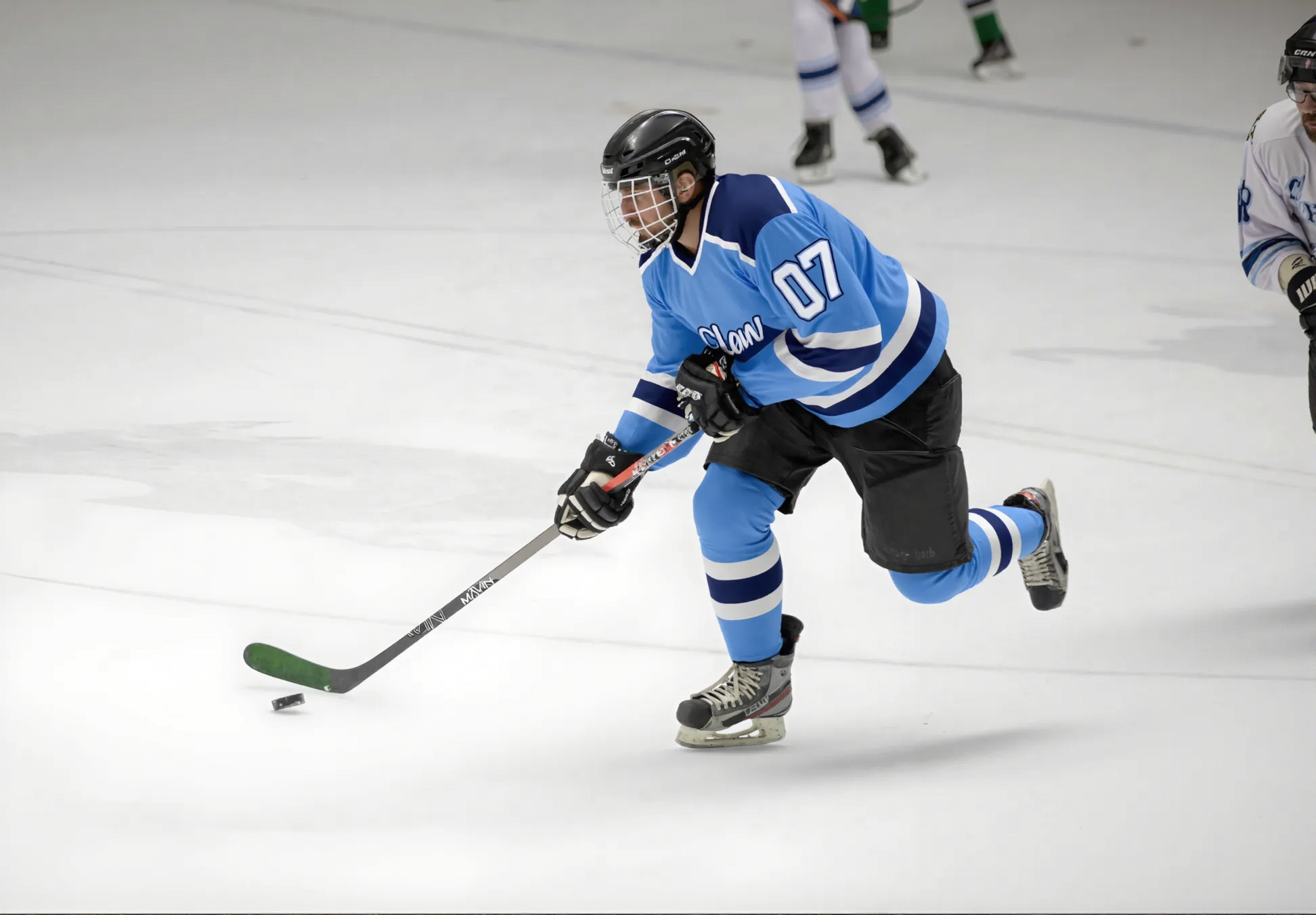
The unique context of hockey—frigid rink temperatures paired with intense physical exertion that generates significant heat—creates an inherent conflict between "warmth" and "breathability" in jerseys. Local players often struggle with the dilemma: wearing too much leads to bulky sweatiness, while wearing too little leaves you shivering. Especially for youth players and recreational enthusiasts, gear that balances comfort and functionality is essential. Drawing on International Ice Hockey Federation (IIHF) standards and real-world experience from U.S. community rinks, this guide breaks down fabric technology, design details, and customization strategies to help you master this balance and turn your jersey into a performance booster.
Seventy percent of a hockey jersey’s warmth and breathability comes from its fabric combination. Based on the latest designs in professional hockey apparel, we’ve developed an accessible "sandwich structure" solution for local players:
- Recommended Material: 30% recycled polyester + 70% modal blend (120-150g/㎡)
Benefits: Modal’s natural moisture absorption quickly draws sweat away from the skin, while the hollow structure of recycled polyester creates an insulating air layer—drying 3x faster than cotton and aligning with current eco-friendly trends.
- Pitfalls to Avoid: Steer clear of 100% cotton (it soaks up sweat, becomes heavy, and retains moisture, risking post-game chills); avoid ultra-thin fabrics under 100g/㎡ (insufficient warmth and prone to snagging on protective gear).
- Premium Option: 2025’s trending polylactic acid (PLA) bio-based fiber
How it works: This eco-friendly material converts body moisture into heat, while micro-air pockets between fibers trap warmth—boosting insulation by 25% without sacrificing breathability. It’s also biodegradable.
- Budget Alternative: 320g fleece spliced with mesh (only use mesh on sweat-prone areas like the back and underarms for balanced warmth and targeted ventilation).
- Game-Ready Choice: 400D nylon oxford (with water-repellent coating)
Features: 200N tear resistance to withstand skate scrapes and physical collisions; 6000mm windproof rating to block cold rink drafts effectively.
- Youth Adaptation: 210D lightweight nylon (30% lighter to avoid restricting movement) with double reinforcement at elbows and shoulders—meeting USA Hockey’s protective requirements for youth gear.
Hockey’s wide arm movements and bending motions demand jerseys that shift seamlessly between static warmth and dynamic breathability. These three details, refined through U.S. community league feedback, deserve top attention:
- How it works: 3-5cm pleats at the underarms expand when arms are raised, creating natural air vents that increase breathability by 40% compared to flat seams; they close automatically when arms lower to reduce heat loss.
- Custom Tip: Reinforce pleats with 5% spandex elastic binding to prevent stretching and deformation—ideal for intense gameplay.
- Scientific Design: The neck loses 30% of body heat. Adult jerseys: 8-10cm collar height (covers the cervical spine) with a 45° opening (no tightness when turning the head). Youth jerseys: 6-7cm collar height to avoid throat constriction.
- Material Match: Fleece-lined inner collar for softness against skin; outer collar matches the main fabric for wind resistance.
- Game-Ready Solution: 1cm-wide silicone anti-slip strips inside the waist (prevent jersey ride-up); 10cm side slits at the hem (no restriction when bending); drawstring for adjustable fit—adapting to different body types and warmth needs.
- Recreational Simplification: Keep side slits but use 2cm ribbed cuffs (better elasticity, lower cost)—perfect for practice and community games.
The ideal warmth-breathability balance shifts with "use case," "age group," and "activity intensity." Below are tailored solutions for U.S. players:
-
Youth (8-16 Years Old):
High metabolism = sweat-prone. Prioritize breathability: 200g thin fleece middle layer, 30% mesh coverage on the back, 1 size larger (for protective gear fit—meeting USA Hockey’s under-gear rules). Use eco-friendly fabrics with ≤100ppm lead content (CPSC-certified) for parent peace of mind.
-
Adult Recreational Players:
Less stable core temperature = dynamic balance. Warmth-focused main fabric with mesh panels at sweat zones (underarms, lower back); hook-and-loop cuff adjusters (loosen for ventilation, tighten for warmth).
-
Community Teams:
Add personalization—like Missoula’s community team with rainbow accents (spreading inclusivity while maintaining performance). For team orders: standardize outer fabric, customize inner layer thickness per player preference.
- Water Temperature: Wash in cold water (≤30°C). High heat damages PLA fibers and moisture-wicking materials, reducing insulation by over 30%.
- Detergent: Avoid bleach or fluorescent detergents. Use mild, fragrance-free options (e.g., Tide Free & Gentle) to prevent fabric stiffening and breathability loss.
- Drying: Lay flat to air dry (hanging causes shoulder deformation). Never tumble dry—high heat melts elastic fibers and ruins windproof coatings.