
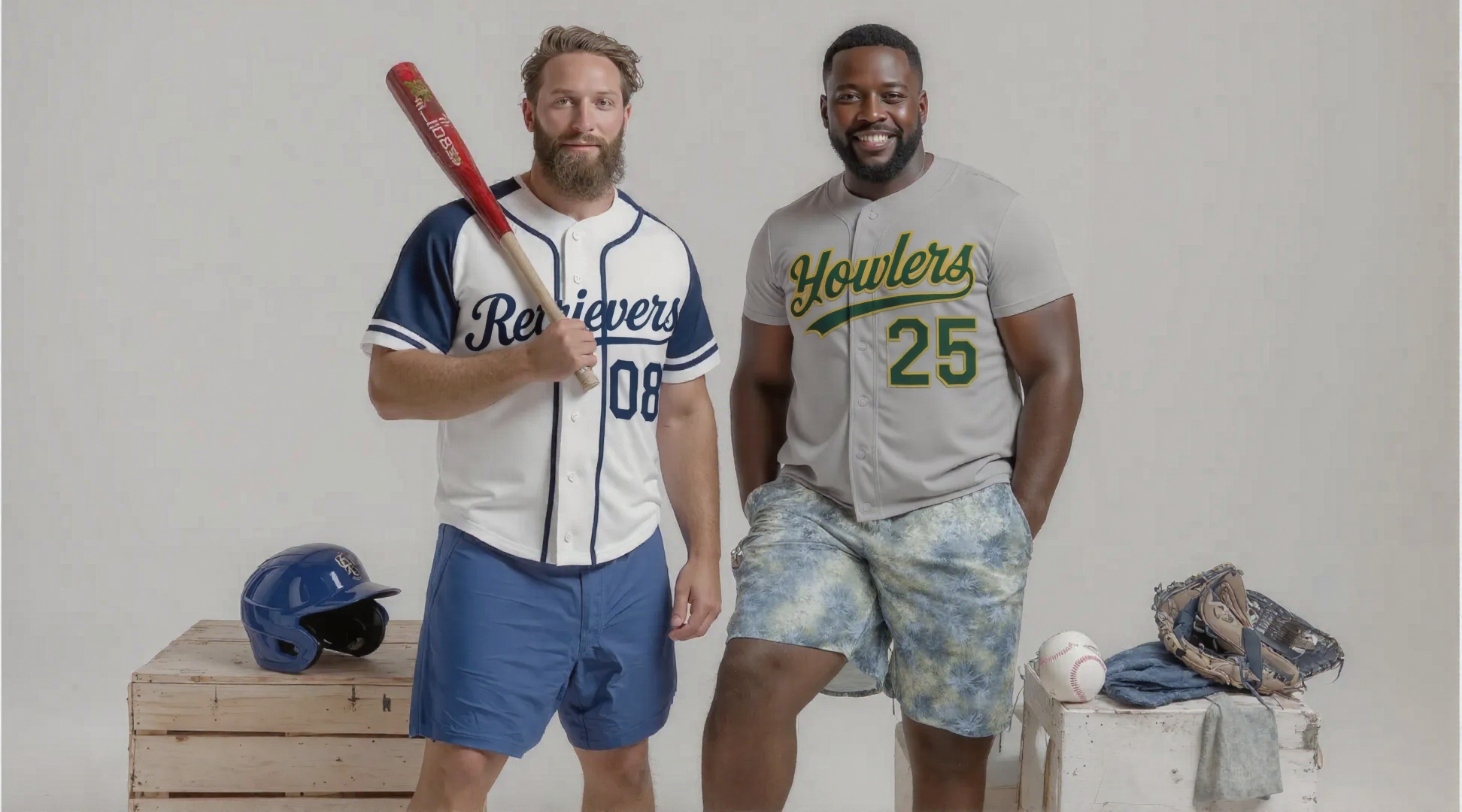
Ever had this happen? Your Little League team’s jerseys turn into sweat-soaked rags by the end of summer practice, or your rec league crew freezes through fall night games because you picked the wrong fabric. Trust me, I’ve seen it a hundred times.
Fabric thickness might seem like a tiny detail, but it makes or breaks how your jersey feels, how well you play, and how long it lasts. And let’s be real—with U.S. weather swinging from Florida’s swelter to New York’s crisp fall evenings, picking the right thickness isn’t just nice, it’s essential. Let’s break this down with real-world tips and numbers that actually matter.
- First Thing: Stop Guessing—Look at GSM
Forget when a seller says “thick” or “thin.” The only number that counts is GSM (grams per square meter). Higher GSM means thicker, warmer fabric—but less breathability. Baseball jerseys usually land between 120-300 GSM, and each range is for a specific vibe:
- 120-160 GSM: Lightweight, usually mesh or thin polyester—perfect for sweating it out
- 170-220 GSM: Mid-weight, the sweet spot for most games—balances breath and warmth
- 230-300 GSM: Heavyweight, often cotton-blend—great for chill, but not for running bases
Pro tip: 100% polyester beats cotton-blend for breathability, and a little spandex (5-10%) keeps even mid-weight jerseys from feeling stiff when you swing. - Season-by-Season: What Works Where in the U.S.
Baseball season runs March to October here, and each month needs a different fabric. Let’s match GSM to your zip code and schedule.Summer (June-August): Beat the Heat with LightweightGSM Sweet Spot: 120-160When temps hit 90°F in Texas or Florida, the last thing you want is a jersey that traps sweat. Go for mesh polyester first—those tiny holes let air flow like nothing else. Thin plain-weave polyester works too, but mesh is king for practice.Mistakes to Skip:
- No cotton-heavy fabrics (over 30% cotton)! They soak up sweat, get heavy, and turn crunchy after sunbathing. Total nightmare for a 2-hour game.
- Don’t fall for “cheap lightweight” garbage. Some low-GSM fabrics are so thin they tear after one wash—ask for a sample! Hold it up to the light; if you can see through it, pass.
- Real Example: The Florida Little League teams I work with all use 140 GSM mesh. We add extra mesh panels under the arms and on the back—guys say it’s like having a fan built in.
Spring/Fall (March-May, Sept-Oct): Mid-Weight = No BrainerGSM Sweet Spot: 170-220These are the best baseball months, but man, the temperature difference!New York in April? 60°F at noon, 40°F for morning practice. Mid-weight fabric handles both without missing a beat.Scene-by-Scene Picks:- Day Games: 170-190 GSM poly-blend. Stays crisp for photos, but doesn’t cling when you sprint to first.
- Night Practices: 200-220 GSM poly with spandex. Warmer than plain poly, but still flexes when you pitch.
- Pro Move: Skip the “super thick” fall jerseys. Anything over 220 GSM gets too hot by afternoon—go for removable cuffs instead. My rec league team swears by these; we peel ’em off when the sun comes out.
Winter (Indoor Drills/Southern Warmths): Heavy but FlexibleGSM Sweet Spot: 230-260Northern winters mean indoor training, and Southern winters? Sometimes a 60°F game. Either way, heavyweight doesn’t have to mean clunky.Best Bets:- Fabric: 230-250 GSM cotton-poly (max 40% cotton). Cotton keeps you warm, poly keeps it from shrinking or wrinkling. Win-win.
- Details: Stitch stretch panels on shoulders—thick fabric kills your throw if it’s too stiff.
- Avoid: 300+ GSM “winter” jerseys. Indoor heat turns ’em into saunas, and they rub raw under pads. Not worth it.
-
Pro Tips: 3 Mistakes 90% of People Makea. Match Fabric to CustomizationEmbroidery on thin fabric (under 160 GSM)? It pulls and warps—trust me, I’ve fixed too many messed-up logos. Heat transfers work better on mid-weight stuff, and numbers? Stick to 170+ GSM—they peel less.b. Size Up (or Down) for Your Crew
- Kids/Little Leaguers: 170-190 GSM with spandex. They’re growing fast, and stiff fabric restricts their swing. Plus, soft material = no scraped elbows.
- Adults: Big guys? 160-180 GSM—thin enough to breathe, not tight. Slim guys? 190-200 GSM—adds a little bulk so it doesn’t hang like a sack.
c. Wash Smart to Make ’Em LastHeavy fabrics (220+ GSM): Cold water only—hot shrinks ’em. Thin mesh: Don’t wring it! Roll it in a towel to squeeze water. And always wash inside out—saves prints and embroidery from fading. - Quick Reference: The Only Chart You Need
Season/SceneGSM RangeBest Fabric TypeWhere It WorksSummer Practice/Games120-160Mesh PolyesterEverywhere (duh)Spring/Fall Day Games170-190Polyester BlendNortheast, MidwestFall Night Practices200-220Spandex-Blended PolyNorthern StatesIndoor Winter Drills230-260Cotton-Poly (40% Cotton)Northeast, NorthwestYouth Teams170-190Stretchy PolyesterAll Over the U.S.Picking the right GSM isn’t rocket science—it’s just about matching your jersey to how and where you play. Whether you’re coaching a Little League squad or gearing up for your company’s tailgate tournament, the right fabric makes every swing feel easier.Still stuck? Click the button below for a free custom recommendation. We’ll even send fabric samples straight to your door—no cost, no hassle. Let’s make sure your next jersey is a home run, not a strikeout!